
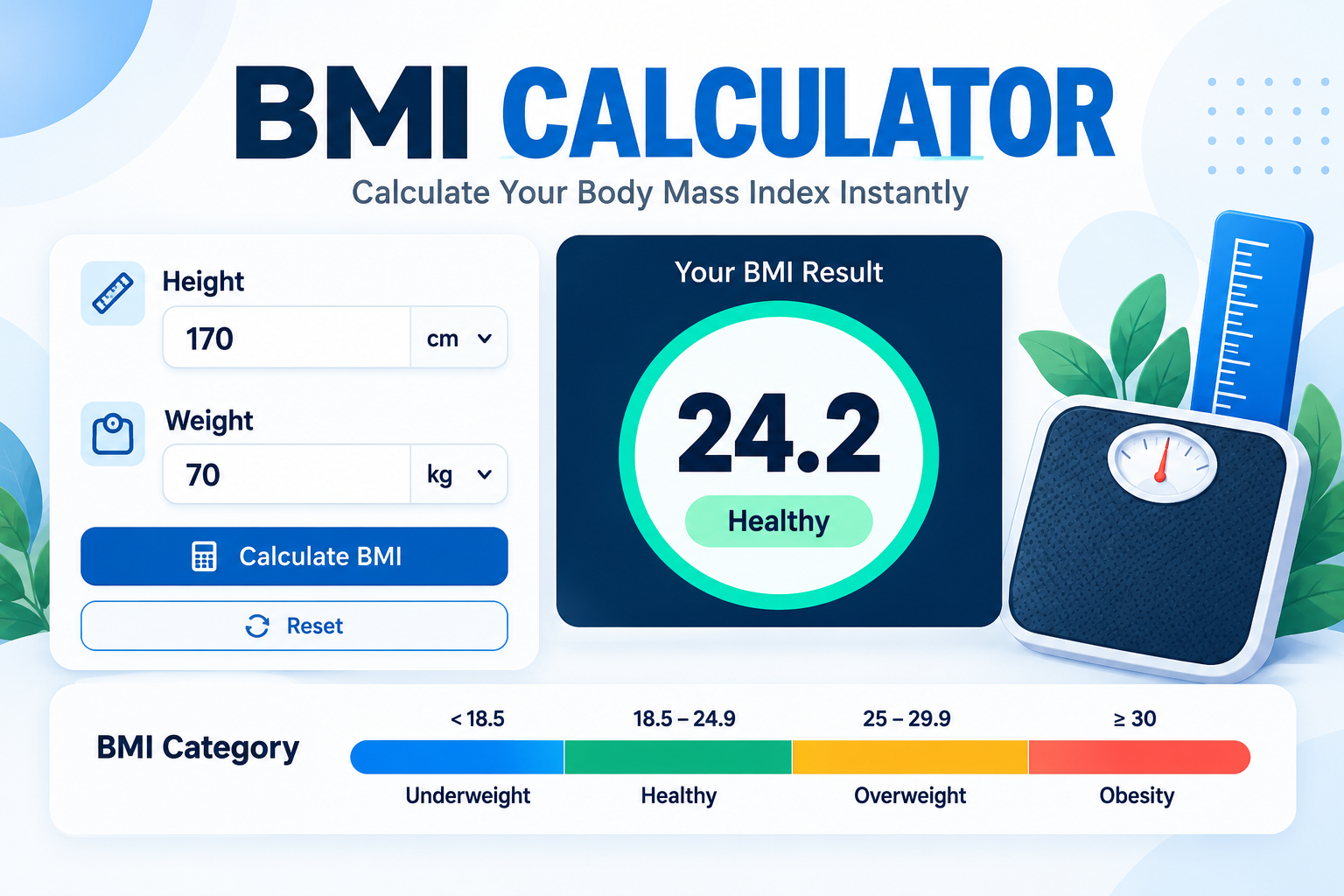
Use this free BMI calculator to estimate body mass index from your height and weight. Choose metric or imperial units, enter your measurements, and calculate an estimate in your browser. The result includes a general adult BMI category and an explanation of how to interpret it responsibly.
Enter your measurements and calculate to update the result.
This tool is for general information, not diagnosis or individual medical advice. BMI is a screening measure and does not directly measure body fat or overall health.
What Is BMI?
Body mass index, usually shortened to BMI, is a calculation that compares a person’s weight with their height. It is widely used as a quick screening measure for adults because it is easy to calculate from two measurements. BMI can help provide context during a general health conversation, but it is not a direct measurement of body fat and cannot tell you everything about a person’s health.
This BMI calculator provides a numerical estimate and common adult category ranges. It is intended for general education. It does not diagnose a medical condition, recommend a target weight, or replace advice from a qualified healthcare professional.
How to Use the BMI Calculator
- Choose your units. Select metric if you know your height in centimetres and weight in kilograms, or imperial if you use feet, inches, and pounds.
- Enter your height. Use a recent measurement without shoes. In imperial mode, enter whole feet and the remaining inches in their separate fields.
- Enter your weight. Use kilograms in metric mode or pounds in imperial mode.
- Select Calculate BMI. The tool calculates the estimate and displays a general adult reference category.
- Read the context. Treat the number as one piece of information, not a complete assessment of your health or fitness.
BMI Formula
For metric measurements, BMI is calculated by dividing weight in kilograms by height in metres squared. For example, if someone weighs 70 kilograms and is 1.70 metres tall, the calculation is 70 divided by 1.70 multiplied by 1.70, which gives a BMI of about 24.2.
For imperial measurements, weight in pounds is divided by height in inches squared and multiplied by 703. The calculator converts the entered measurements internally so that the displayed estimate uses the same BMI scale regardless of the selected units.
Common Adult BMI Categories
- Below 18.5: commonly classified as underweight for adults.
- 18.5 to below 25: commonly described as the healthy-weight reference range for adults.
- 25 to below 30: commonly classified as overweight for adults.
- 30 and above: commonly grouped into obesity categories for adults.
These ranges are general reference categories and should not be treated as a personal verdict. The right interpretation depends on age, body composition, medical history, and other factors. Different guidance may apply in some populations or clinical circumstances.
What BMI Can and Cannot Tell You
BMI can be useful for screening and population-level comparisons. It is easy to repeat over time and may help a healthcare professional decide whether a more detailed assessment is appropriate. It can also be useful as a starting point when discussing weight-related health risks.
However, BMI does not distinguish muscle from fat, show where fat is distributed, measure nutrition, or assess strength and fitness. A muscular person may have a higher BMI without having the same body composition as another person with the same number. Conversely, a BMI in a reference range does not guarantee that a person has no health concerns.
Who Should Be Careful Interpreting BMI?
Standard adult BMI categories are not designed to be interpreted in the same way for everyone. Children and teenagers require age- and sex-specific growth references. Pregnancy, fluid retention, certain health conditions, older age, and high levels of muscularity can also affect how useful BMI is as a standalone measure. Do not use this adult calculator to assess a child or teenager.
If you are worried about your weight, nutrition, symptoms, or a change in your health, speak with a qualified healthcare professional who can consider your individual circumstances. Avoid making drastic diet or exercise changes based only on an online BMI result.
Metric and Imperial Measurements
Metric mode uses centimetres and kilograms, while imperial mode uses feet, inches, and pounds. Choose the system that matches the measurements you have available. If you are converting measurements yourself, check that you have not entered inches in the centimetres field or pounds in the kilograms field; unit mistakes can change the result substantially.
For a useful comparison over time, measure height and weight consistently and use similar conditions when taking measurements. Small changes may reflect normal daily variation rather than a meaningful change in body composition.
Privacy and Data Entry
The calculator runs in your browser and does not require an account or contact information. Enter only the measurements needed for the calculation. Because health and body measurements can be personal, use caution when sharing screenshots or results publicly, especially if they include other identifying details.
Frequently Asked Questions
Is BMI a diagnosis?
No. BMI is a screening measure. It cannot diagnose a condition or independently determine whether a person is healthy.
Can I calculate BMI in feet and pounds?
Yes. Select imperial units, enter feet and any remaining inches, and provide weight in pounds.
Why is BMI different from body-fat percentage?
BMI compares weight with height. Body-fat percentage estimates the proportion of body weight that is fat, using different measurement methods. The two values describe different things.
Can athletes use this calculator?
Athletes can calculate a BMI value, but high muscle mass may make common adult categories less informative. A more complete assessment may be needed to understand body composition and health.
What should I do with the result?
Use it as general context, not a goal or diagnosis. If the result raises questions, discuss it with a healthcare professional who can consider your full health picture.
Use BMI as One Piece of Information
This free online BMI calculator makes it easy to estimate body mass index with metric or imperial measurements. The number and category can help explain a common screening measure, but they should never replace personal medical guidance. Health is influenced by many factors, and a single calculation cannot capture them all.
Related Tools
Explore these related free tools: Age Calculator · Tip Calculator · Loan Calculator.